
RESEARCH SYMPOSIUM | Alpine plants: evolution and challenges of life at high altitudes
July 5 – 8, 2026
125th anniversary of the Alpine Garden on the Schachen, Wetterstein Range
High altitude ecosystems are affected by extreme environmental conditions. Yet they are important wilderness areas that harbour a considerable share of the world’s plant diversity. The symposium offers a platform to explore up-to-date research on ecology, evolution and systematics of plants at high altitudes. The focus is on the dynamics of subalpine and alpine ecosystems, to foster the understanding of their diversity mechanisms and to contribute to their conservation.
Programme
July 5, 2026
BOTANICAL GARDEN MUNICH-NYMPHENBURG
Botanisches Institut, Großer Hörsaal
PUBLIC WELCOME EVENING
6:00 pm
Jörg Overmann (Staatliche Naturwissenschaftliche Sammlungen Bayerns)
Gudrun Kadereit (Botanische Sammlungen München)
Begrüßung
PUBLIC EVENING LECTURE
6:15 pm
Andreas Gröger (Botanischer Garten München-Nymphenburg):
„Hochgebirgsgarten der ersten Generation: 125 Jahre Alpengarten auf dem Schachen“ (auf Deutsch / in German)
6:45 pm
Christian Körner (Universität Basel, Department Umweltwissenschaften):
„Die Welt der Alpen im Wandel“ (auf Deutsch / in German)
7:45 pm
Snacks & talks
RESEARCH SYMPOSIUM
July 6, 2026
BOTANICAL GARDEN MUNICH-NYMPHENBURG
Botanisches Institut, Großer Hörsaal
9:00 am – 12:00 am
Conference Session 1: Dynamics of alpine environments
Keynote by Jake Alexander (ETH Zurich):
„Why are range shifts of mountain plants not keeping up with climate change?“
Jörg Ewald (Hochschule Weihenstephan-Triesdorf):
„The response of Bavarian mountain forests to climate change“
Simon Pfanzelt (Botanischer Garten München-Nymphenburg):
„Genetic structuring of the carnivorous plant Pinguicula alpina (Lentibulariaceae) in the Bavarian Alps“
Petr Sklenár (Faculty of Science, Charles University, Prague) et al.:
„Tropical alpine plant life: contrasting flowering phenology between tropical and temperate alpine communities“
12:00 am – 1:30 pm
Lunch at the Café of the Botanic Garden (at own expense)
1:30 am – 2.30 pm
Poster presentations (with flash talks)
Sarah Bürli (Botanical Garden of the University of Graz):
„Germinating against the odds“
Andreas Gröger (Botanischer Garten München-Nymphenburg) et al.:
„Phenological Monitoring Programme: climate change research at the Schachen Alpine Garden“
Lucie Holzbachová (Faculty of Science, Charles University, Prague) et al.:
„Flower economic spectrum: A key to understanding the floral diversity of alpine plants“
Thomas Kudernatsch (Bayerische Landesanstalt für Wald und Forstwirtschaft, Freising) et al.:
„Denser and more diverse: vegetation change in unmanaged forests of the Calcareous Alps since the mid-1980s“
Michelangelo Olleck (Hochschule Weihenstephan-Triesdorf, Mountain Ecosystem Research Group, Freising) et al.:
„Pinus mugo krummholz: a candidate for biome shift?“
Loretta Giuseppina Pace (Alpine Garden of Campo Imperatore-Gran Sasso, University of L’Aquila) et al.:
„High-Altitude Nature Conservation: An Alpine Botanical Garden in the Middle of the Mediterranean region“
Anna Pasinato (Systematics, Biodiversity and Evolution of Plants, LMU München) et al.:
„Quaternary Evolution of the Bavarian Flora and Beyond: Genetic and Ecological Adaptation to Changing Environments“
Špela Pungaršek (Slovenian Museum of Natural History, Ljubljana):
„Hundred years of the Juliana Alpine Botanical Garden – a hundred years of change“
Mihai Pușcaș (Alexandru Borza Botanic Garden, Babes-Bolyai University, Cluj-Napoca) et al.:
„Alpine vegetation dynamics under climate change: insights from over more than two decades of monitoring in the Eastern Carpathians“
Petr Sklenár (Faculty of Science, Charles University, Prague) et al.:
„Biogeography, niche shifts, and trait evolution across orobiomes in Caltha sect. Psychrophila plant lineage“
2:30 pm – 5:30 pm
Conference Session 2: Evolutionary history and diversity patterns
in alpine ecosystems
Keynote by Felix Gugerli Künzle (Swiss Federal Research Institute WSL, Birmensdorf):
„Genomic signatures of adaptation in plants in response to environmental variation in space and time“
Marcus Koch (Center for Organismal Studies (COS), Biodiversity and Plant Systematics, Heidelberg University) et al.:
„Ghosts and bedrock shift – past, present and future of the extremely rare alpine Cochlearia excelsa in Austria“
Teresa Zeni (Department of Botany, University of Innsbruck):
„Patterns of polyploid frequency in the Eastern Alps based on extensive sampling across elevational gradients“
Michał Ronikier (Institute of Geography and Spatial Organization,
Polish Academy of Sciences, Warsaw):
„Alpine plants in the Carpathians: a high-mountain comparative phylogeography“
Alptekin Koc (Faculty of science, Department of Botany, Charles University, Prague):
„Reproductive strategies of tropical and temperate alpine plants: a comparison between the Ecuadorian Andes and the Rocky Mountains“
6:00 pm
Beergarden dinner at Hirschgarten (at own expense)
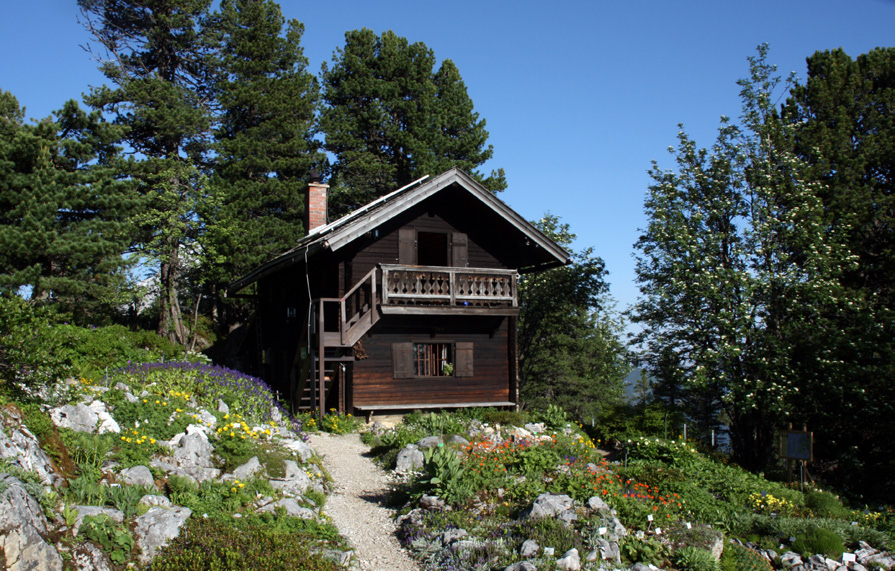
July 7, 2026
EXCURSION DAY
ALPENGARTEN AUF DEM SCHACHEN
or MURNAUER MOOS
Tour 1: Alpengarten auf dem Schachen
Hike to the satellite garden in the Wetterstein Range (next to Garmisch-Partenkirchen).
Ascent: 3.5 hours, 10 km, 850 m altitudinal difference, no major climbs.
Requirements: General fitness, adequate hiking shoes, sun protection, rain coat, drinks and snacks.
6:00 am Meeting point at the Botanical Institute, bus transfer to Elmau
8:00 am Ascent hike starting at the parking lot next to Schloss Elmau
12:00 am Arrival at the Alpengarten auf dem Schachen (drinks and snacks provided)
3:00 pm Descent hike
6:00 pm Bus transfer from Elmau to Munich
8:00 pm Arrival at the Botanical Institute
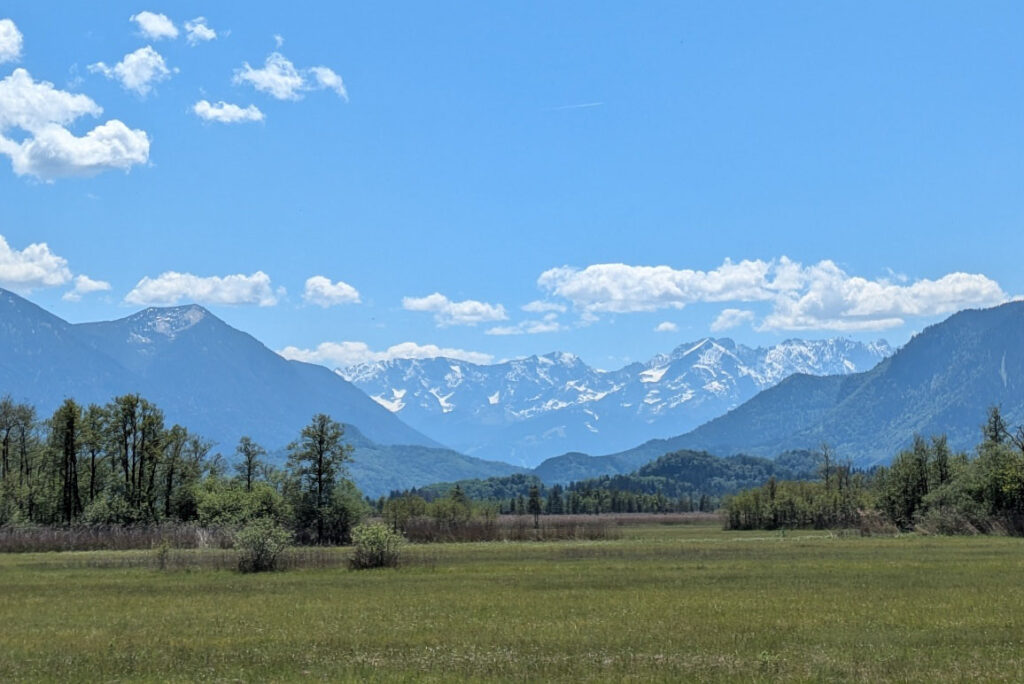
Murnauer Moos
Tour 2: Murnauer Moos
Hike through the nature reserve Murnauer Moos, an extense peat bog in Bavaria.
Loop trail: 6 hours, 12 km, no climbs
Requirements: Adequate hiking shoes, sun protection, rain coat, drinks and snacks.
8:00 am Meeting point at the Botanical Institute, bus transfer to Murnau
9:30 am Hike starting at the parking lot next to the Biological Station Murnau
4:00 pm Bus transfer from Murnau to Munich
5:30 pm Arrival at the Botanical Institute
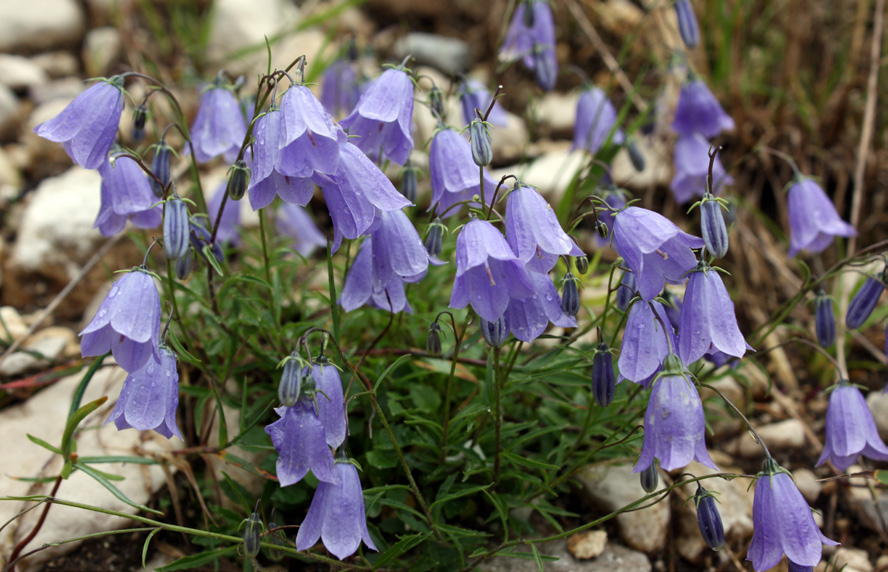
July 8, 2026
BOTANICAL GARDEN MUNICH-NYMPHENBURG
Botanisches Institut, Großer Hörsaal
9:00 am – 1:00 pm
Conference Session 3: Nature conservation and case studies at high altitudes
Keynote by Pau Canicero Campmany (Universitat Autónoma de Barcelona):
„Drivers of intraspecific diversity in high-elevation plants: insights from the Iberian Peninsula to the Alps“
Patrik Mráz (Department of Botany, Charles University, Prague) et al.:
„A natural laboratory of polyploid evolution: alpine Pilosella rhodopea as the largest diploid–autopolyploid contact zone in angiosperms“
Valentin Heimer (University of Innsbruck):
„Polyploidy and hybridisation shaped the evolutionary history of Luzula sect. Luzula in the Eastern Alps“
Elvira Hörandl (Dept. Systematics, Biodiversity, Evolution of Plants, University of Göttingen) et al.:
„Speciation and biogeographical history in the European Alpine System: the radiation of Ranunculus sect. Euromontani (Ranunculaceae)“
Francesco Dal Grande (Padua Botanical Garden & Dept. of Biology, University of Padua) et al.:
„Alpine Botanical Gardens and the Future of Ex Situ Plant Conservation“
Stefano Azzolini (MUSE – Museo delle Scienze, Trento) et al.:
„Conservation actions for Saxifraga tombeanensis in the Italian Alps“
Anna Janiczek (W. Szafer Institute of Botany Polish Academy of Sciences, Cracow) et al.:
„Between the mountains and the polar zone: biogeography and evolutionary history of Dryas octopetala L.“
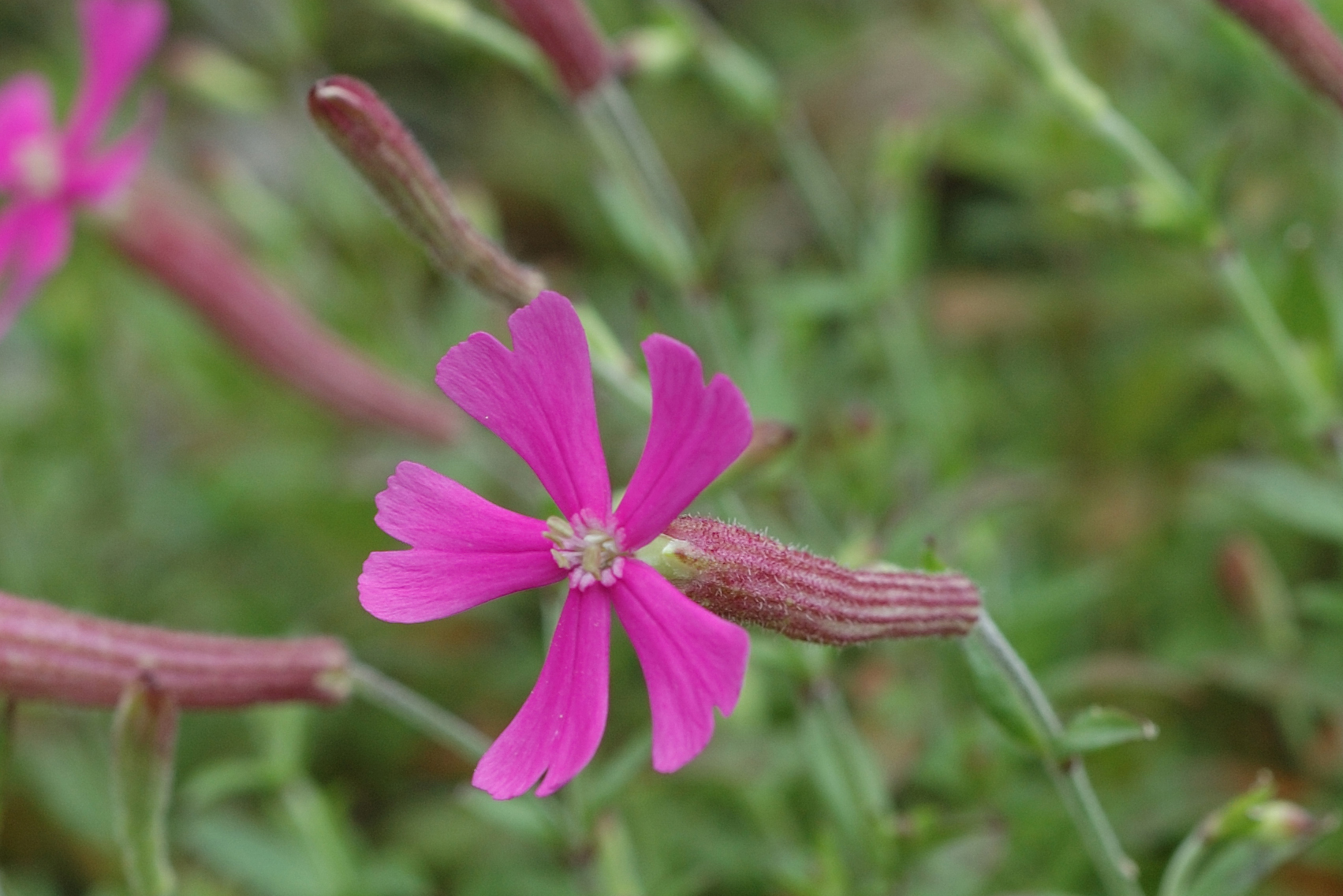
Silene schafta in the Munich Alpinum
1:00 pm Lunch & Farewell
at the Café of the Botanic Garden (at own expense)
2:00 pm
Option: Guided tour in the alpine collections of Munich Botanical Garden